
COIN Expands Across the Mid-South: From Memphis to a Tri-State Movement
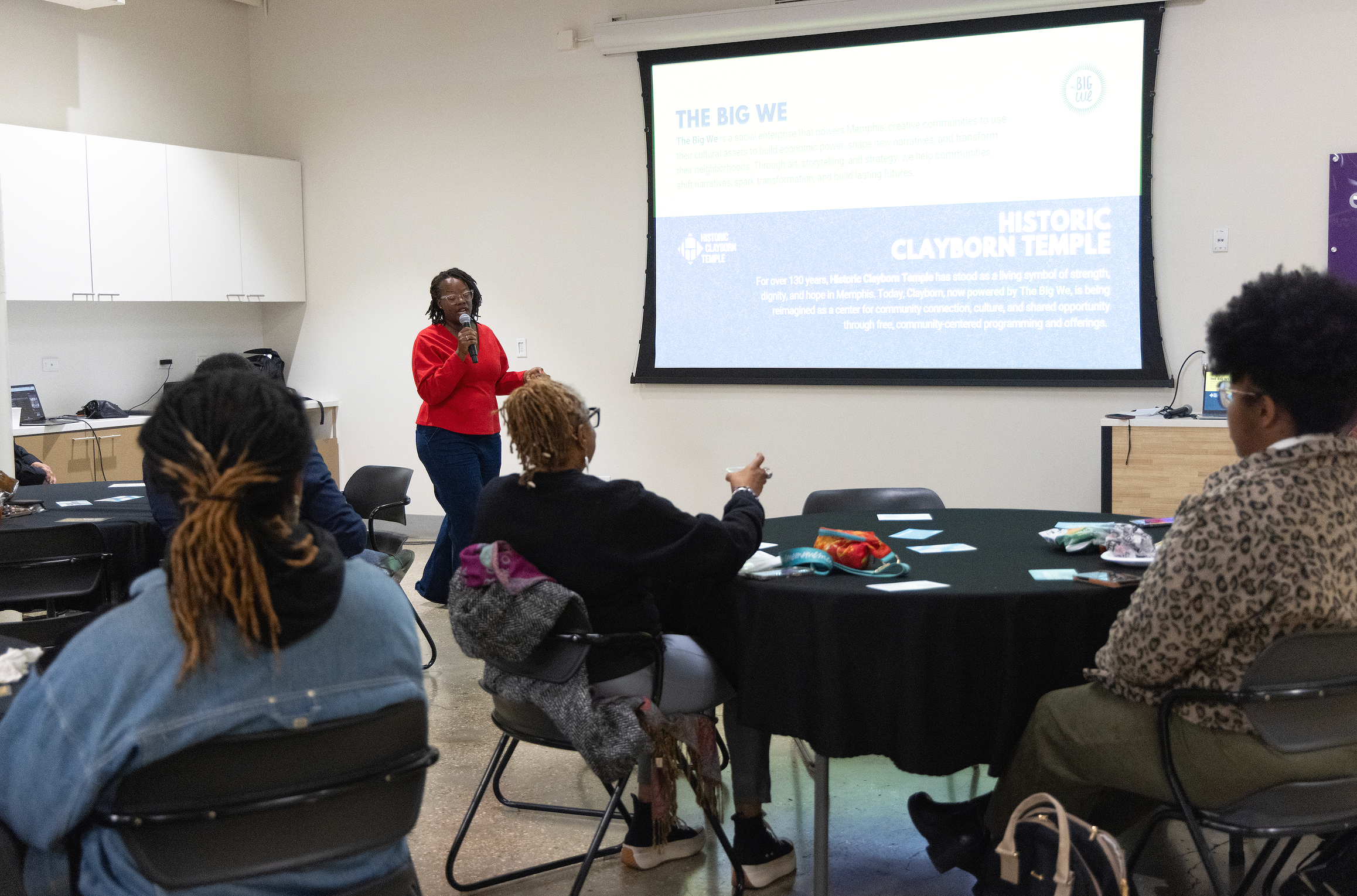
Director of Programs, Sameka Johnson, presenting at a COIN Café session.
The COIN program, Co-Op Opportunity for Inclusive Neighborhoods, has officially grown into a tri-state initiative, with participants from across Tennessee, Northern Mississippi, and as far as Kentucky joining the newest cohort. Originally designed to serve Memphis entrepreneurs, COIN is now attracting emerging cooperative leaders from throughout the Mid-South who are ready to build community-owned businesses together.
This year’s cohort includes approximately 23 emerging co-op groups, each made up of three to six participants. Some are refining their concepts. Others are shaping pitches and preparing for potential capital opportunities. All are stepping into a structured process designed to strengthen cooperative governance and long-term sustainability.
A Full Room and Focused Energy
After several weeks of virtual sessions, participants gathered for their first in-person meeting at Clayborn Temple. The turnout reflected more than curiosity. It signaled commitment.
“I was happy that they came,” said COIN Program Director Sameka Johnson. “There’s always that narrative that folks can’t work together. But they showed up. They filled the space. They leaned in.”
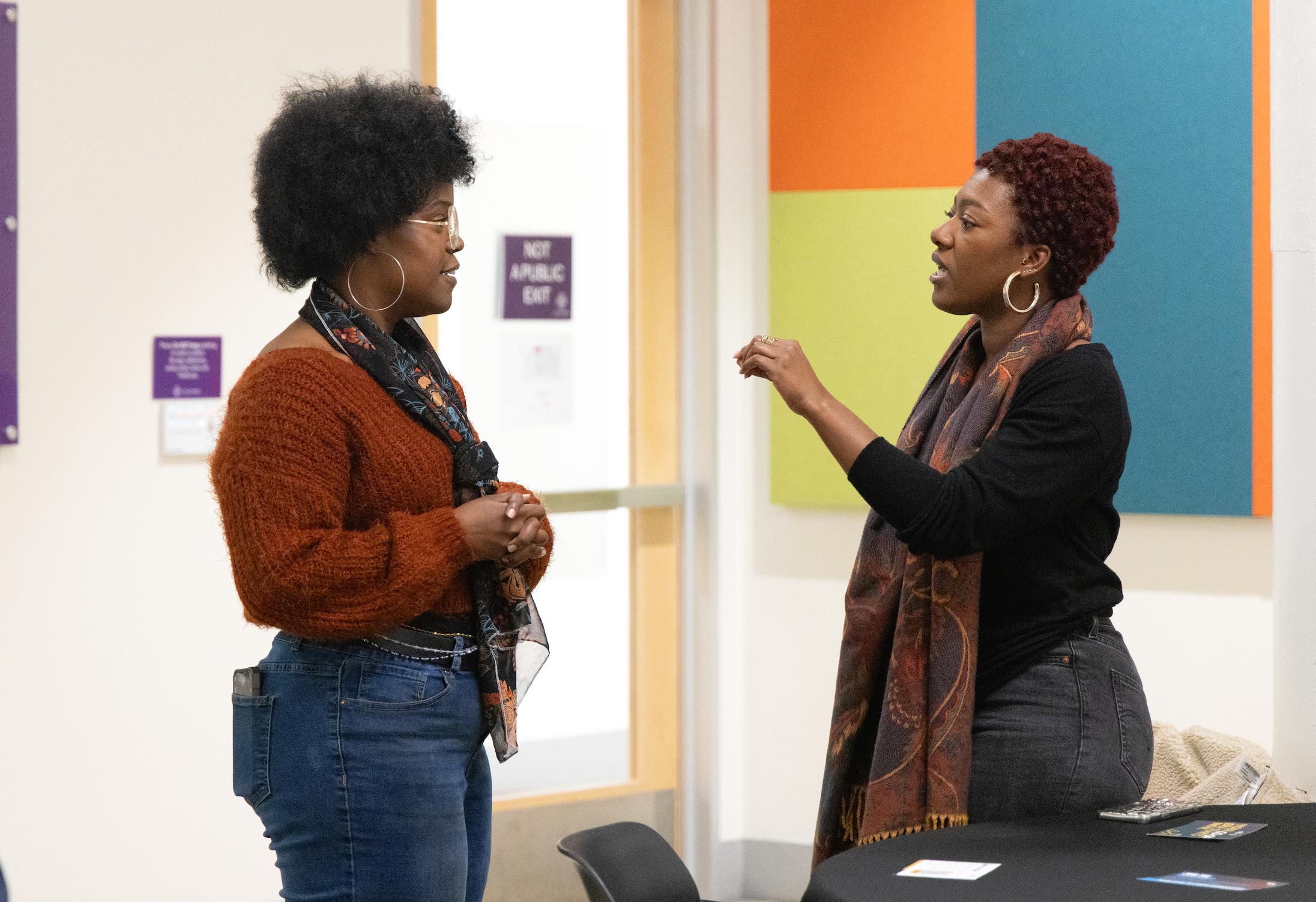
Two COIN Café attendees having a discussion.
Early sessions focused on clarity. Many participants initially entered with questions about loans. Instead, they found themselves wrestling with a foundational question: What does it truly mean to structure a cooperative business? During the in-person session, participants presented their ideas and received direct, honest feedback about whether their models aligned with cooperative principles. The conversations were candid and, at times, challenging.
“There were some hard truths,” Johnson reflected. “But it was the right time for that reality check. This is about positioning them correctly before they move forward.”
That rigor is central to COIN’s approach. The program is not simply launching businesses. It is cultivating community-owned enterprises grounded in democratic practice and shared accountability.
A Growing Interest in Cooperative Economics
As the tri-state cohort progresses, a common theme continues to surface. Participants are eager for alternatives to traditional workplace hierarchies.
“They’re learning that they’re tired of the regular employer-employee hierarchy,” Johnson shared. “They want something different. They want unity inside their organizations.”
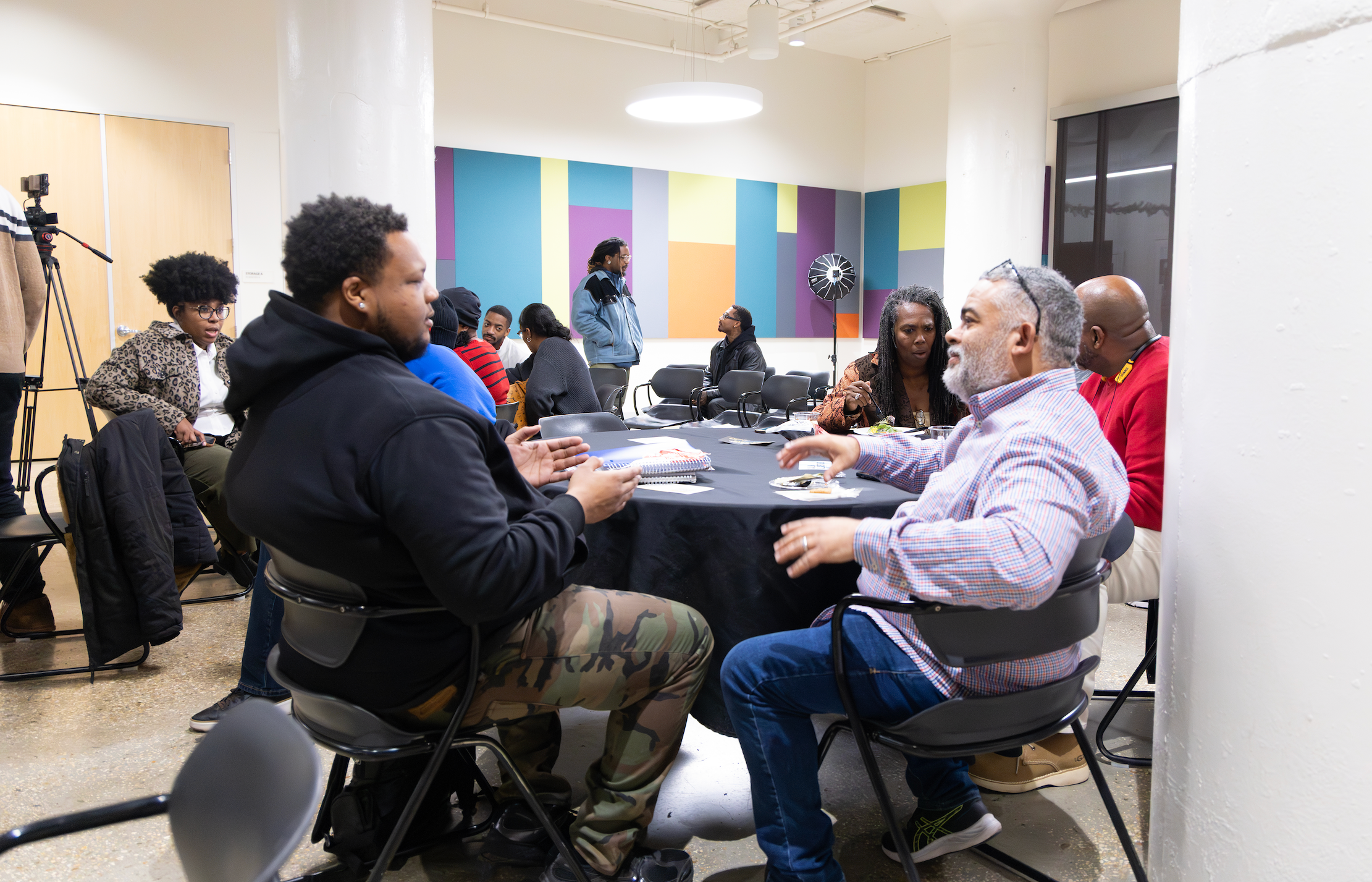
COIN Café attendees collaborating.
Across sessions, conversations center on shared governance, collective decision-making, and the opportunity to build enterprises where ownership and leadership are distributed rather than concentrated. For many, the cooperative model represents both economic possibility and cultural alignment. Even before capital is deployed, the transformation is visible.
“Even if they don’t necessarily begin the loan process, they’ve already made a decision to work as a democracy,” Johnson said. “That shift means something.”
This mindset shift extends beyond individual ventures. Participants return to their communities with a new lens on ownership and economic collaboration, influencing peers and expanding awareness of cooperative structures.
What this Expansion Means
COIN’s evolution into a tri-state program demonstrates growing regional demand for community-owned business models. It reflects momentum across the Mid-South and strengthens Clayborn Temple’s role as a hub for cooperative economic development.
For partners and funders, the expansion signals both reach and readiness. A broader geographic footprint increases collaboration across Tennessee, Mississippi, and Kentucky. It builds a stronger pipeline of cooperative businesses prepared for shared capital. It reinforces a model that prioritizes democratic ownership and collective wealth-building.
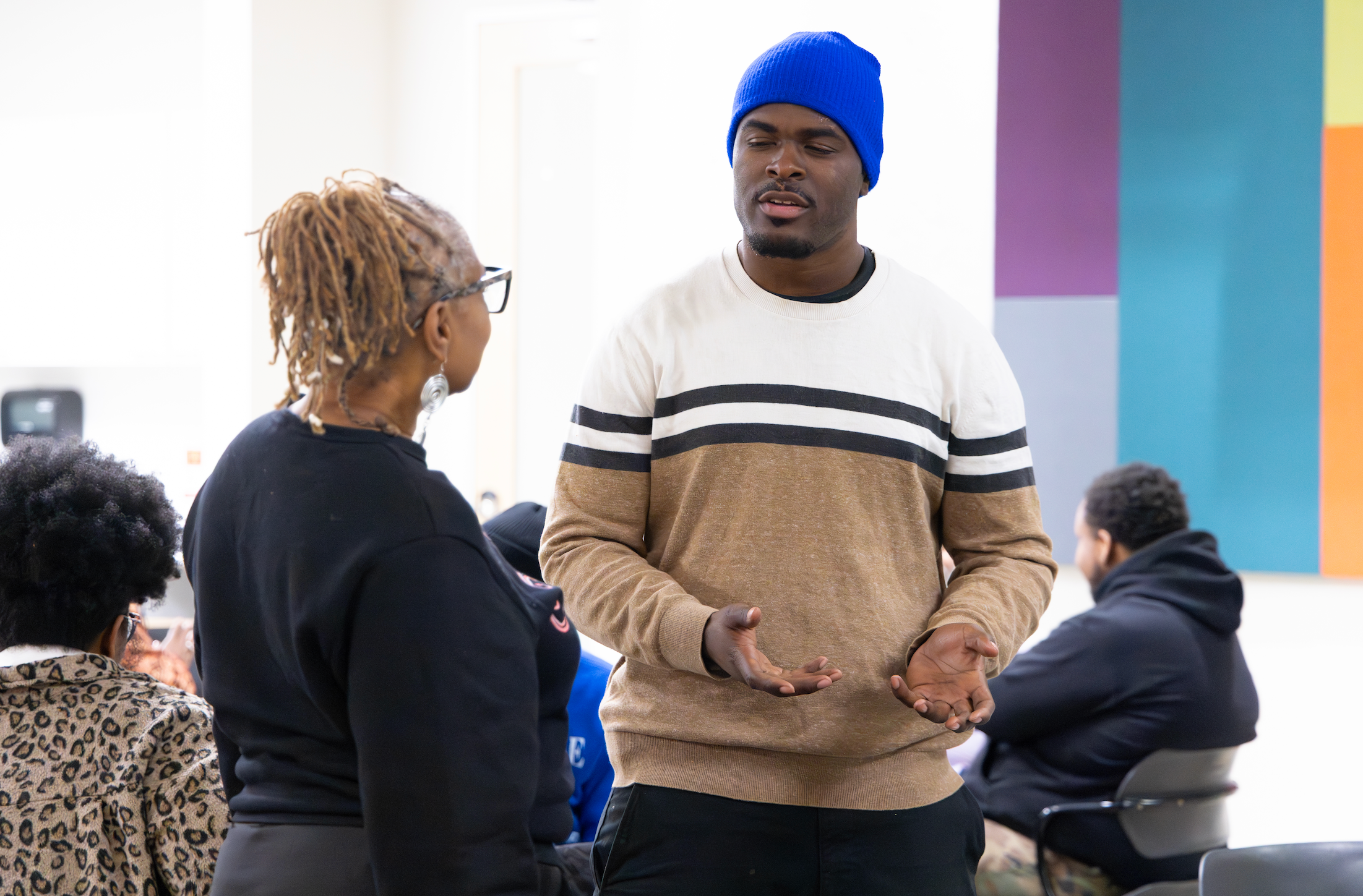
Two COIN Café attendees discussing their co-op ideas.
As this cohort moves deeper into the program, participants will continue refining governance structures, clarifying applications, and strengthening their cooperative frameworks. Some will pursue capital. Others will carry forward the mindset shift into new ventures and collaborations.
What began in Memphis is now influencing the Mid-South.COIN’s growth is evidence that cooperative economics resonates across communities ready to build differently, together.
For more information about our COIN program, contact Director of Programs Sameka Johnson by clicking here. To support Historic Clayborn Temple’s rebuild, click here. Stay up to date on all things Historic Clayborn Temple by following us on Instagram, LinkedIn, and Facebook.